How to Potty Train a Blue Heeler Puppy
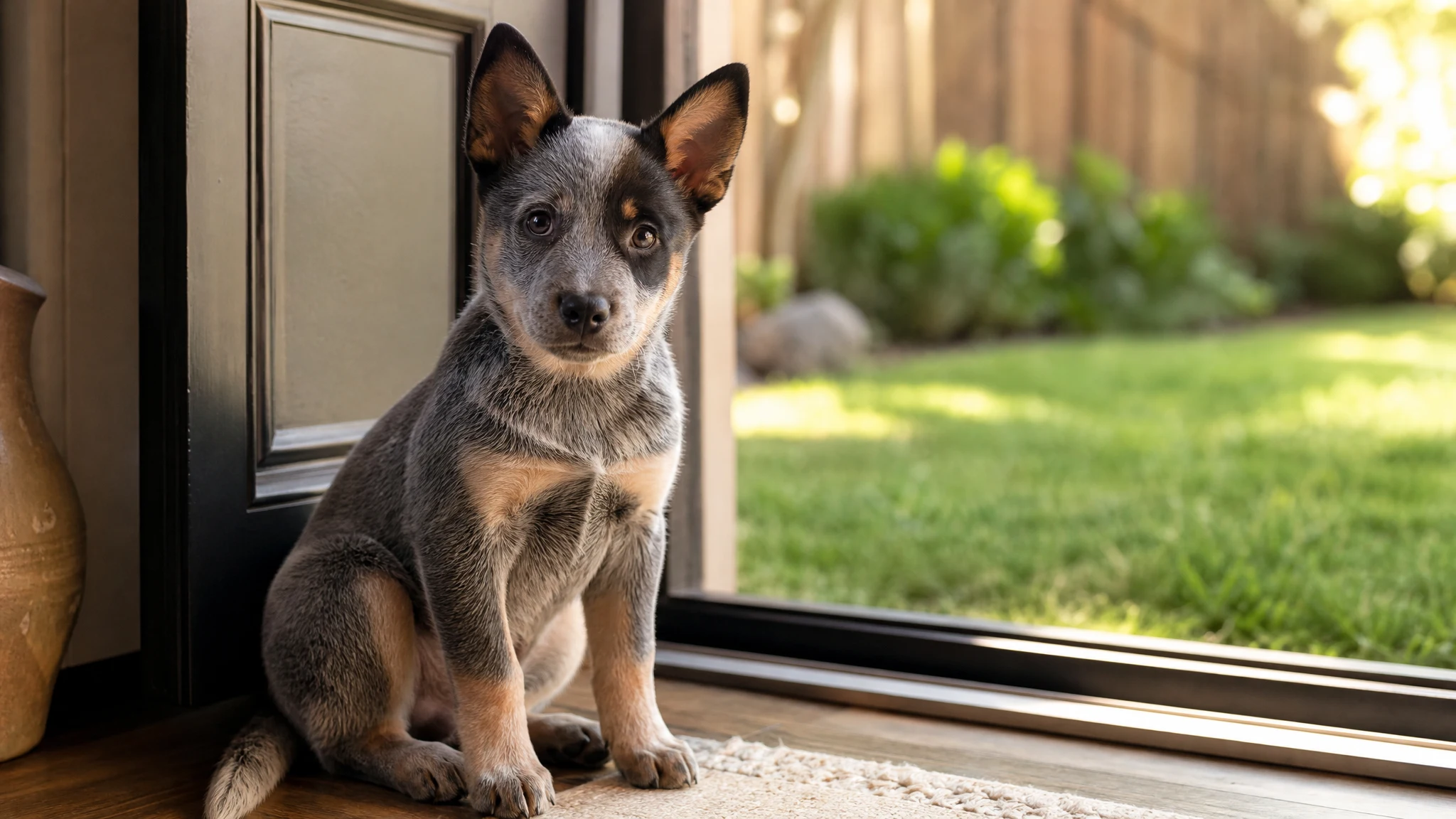
General training information. Every dog is an individual; for health or behavior concerns, see your veterinarian.
If you are working out how to potty train a Blue Heeler, start with a mindset check. This is a smart, busy, independent dog. That works for you when you are consistent and against you when you are casual.
The breed's official name is Australian Cattle Dog, and Blue Heeler is the common name for the blue-coated dogs. The Australian Cattle Dog Club of America (ACDCA) describes the breed as highly intelligent, self-directed, loyal and protective, with a strong desire to please. Individual dogs vary, but that mix is a good reason to build house training on clear routines and rewards.
This guide covers a schedule-based plan, crate use, how to handle accidents without punishment, and what progress may look like.
Why Blue Heeler Potty Training Has Its Own Flavor
Blue Heeler potty training follows the same basic rules as for any puppy. A few breed points shape how you apply them, though.
- Smart and self-directed. The ACDCA calls the breed highly intelligent and self-directed. A puppy who learns fast can also learn the wrong habit fast, such as sneaking off to a corner. Do not leave the pattern to chance.
- Determined. The UK charity PDSA lists independent thinking and determination among the breed's challenges. Expect a puppy who sometimes has better things to do than pee on cue.
- Harsh methods backfire. The ACDCA says positive training works best and that harsh physical methods are seen as a challenge by the breed. Reward-based house training is the right fit.
- High energy. The Westminster Kennel Club rates energy at 5 out of 5 (this is a Westminster rating, not an AKC one). A wound-up puppy forgets her manners, and her bladder, in a hurry.
- Medium size. The PDSA gives an average adult weight of 16 to 20 kg (about 35 to 44 lb). Size alone does not tell you how long a given puppy can wait. Your veterinarian can help you judge what is reasonable for your puppy's age.
What You Need Before Puppy Comes Home
Gather these before the first night.
- A crate sized so your puppy can stand up, turn around and lie down. Too much extra room makes it easier to use one end as a toilet.
- A secure leash and collar or harness, so every trip outside is supervised.
- Small, soft treats your puppy loves, kept for potty rewards only.
- An enzyme-based cleaner made for pet accidents. Check the label for safe use on your floors.
- A clicker, if you like using one. The ACDCA notes the breed excels at clicker training.
- A notebook or phone note to log meals, naps, and potty trips.
- A pen, gate or closed door to limit where your puppy can roam indoors.
Also plan on your puppy coming home at a suitable age. The ACDCA advises keeping puppies with the litter until at least 7 to 8 weeks, and early socialization matters too. Ask your veterinarian how to socialize safely before vaccinations are complete.
Step-by-Step: House Training a Blue Heeler
Step 1: Choose one potty spot and one cue
Pick a spot in your yard or on your walking route. Use the same short cue each time, such as "go potty." Say it once, calmly, as your puppy starts to go. Repeating it endlessly just adds noise.
A smart dog connects the cue, the place and the reward quickly. That is the kind of learning this breed tends to enjoy.
Step 2: Build a schedule around events, not the clock
Young puppies usually need to go out at predictable moments. Take your puppy out:
- First thing in the morning, before anything else.
- Right after waking from any nap.
- Soon after meals and drinks.
- After a play session or a burst of excitement.
- Right before bed and before you leave her crated.
- At regular gaps in between, even if she shows no signs.
Feed at set times and pick up the bowl when she is done. A predictable food schedule makes potty timing easier to predict. How often a young puppy needs to go out varies, so ask your veterinarian what to expect for your puppy's age and health. For nights, your vet can advise on whether overnight trips are needed early on.
Step 3: Go out on leash, every time
Go with your puppy. The PDSA notes the breed dislikes being left unattended in the yard. A puppy left alone outside may wander, fuss at the door or simply wait for you, and you will not know whether she actually went.
Stand still, stay boring, and let her sniff. Playing too early gives her a reason to put off the job. Once she finishes, reward at once.
Step 4: Reward within seconds
The moment she finishes, mark it with a click or a cheerful "yes," then give a treat. Follow with a short bit of play or a walk. Timing matters more than anything here. Rewarding after you walk back inside teaches her the reward is for coming in, not for going outside.
Reward mostly in the early weeks. Cut treats gradually as the habit settles in, and keep praise going.
Step 5: Use the crate as a tool, not a punishment
Dogs generally avoid soiling the place where they sleep, and that is why a crate helps. Make it cozy and tie it to good things: meals, a chew, short naps.
Some rules for crate use:
- Take your puppy straight from the crate to the potty spot, every time.
- Never use the crate as a place to send her when you are angry.
- Do not leave her crated longer than she can reasonably manage. If you are unsure, ask your veterinarian.
- When she is loose indoors, keep her where you can see her, or tether her to you with a leash.
If the crate seems to upset her badly, or she soils it often, talk to your veterinarian or a reward-based trainer. Do not simply push through.
Step 6: Watch for signs, and interrupt gently
Common signs include sniffing the floor, circling, heading for the door, or suddenly stopping play. A heeler's attention can be intense, so you may see her go quiet and stare, then dash off to a corner.
If you catch her starting inside, make a light noise, scoop her up or clip on the leash and head outside. Reward if she finishes there. Do not scold. You want her to learn that outside is the right place, not that going in front of you is dangerous.
Step 7: Keep exercise and mental work in balance
A bored heeler is a trouble-making heeler. The ACDCA says the breed needs a job or purpose along with both physical and mental exercise. For a puppy, that means short training games, sniff walks and puzzle feeders.
Be careful with physical effort. The ACDCA advises against extreme exercise until growth stops and joints are mature. Mental work such as a few minutes of clicker practice tires a smart puppy without stressing growing joints. Ask your veterinarian what exercise is right for your puppy's age.
Step 8: Expand freedom slowly
When your puppy has gone a good stretch with no accidents, give a little more room: one extra room, or a bit more time out of the crate. If accidents return, step back to the earlier level for a while. That is not failure. It is how most puppies learn.
Handling Accidents Without Punishment
Accidents will happen. Here is what to do when they do.
- Stay calm. If you catch her in the act, interrupt with a light sound and take her out.
- Clean the spot thoroughly with an enzyme cleaner so the smell does not invite a repeat.
- Think about what went wrong. Was the gap too long? Was she unsupervised? Did she get too excited?
- Adjust the schedule and supervision for next time.
Never rub her nose in it, scold her after the fact, or use any physical correction. Dogs do not link a delayed scolding to an earlier mess. Punishment can teach her to hide when she goes, which makes house training harder. It also cuts against what the ACDCA recommends for this breed: positive training, with harsh physical methods seen as a challenge.
Tips for a Strong-Minded Heeler
- Be boringly consistent. The ACDCA says owners must be willing to train and to lead. In practice that means the same door, the same spot, the same routine from everyone in the household.
- Keep sessions short and upbeat. A clever puppy gets bored fast with repetition.
- Use a high-value treat for potty success only. It makes outdoor success worth her effort.
- Take her out in all weather. If she only learns to go on sunny days, rainy days will bring accidents.
- Enroll in a puppy class. The ACDCA recommends puppy classes. Look for a reward-based class, and check that its health and vaccine rules suit your veterinarian's advice.
- Teach bite inhibition and manners alongside potty skills. The ACDCA notes puppies must learn not to nip inappropriately, and the PDSA mentions heel nipping as a herding habit. Redirect to a toy rather than punishing.
Common Mistakes to Avoid
- Giving too much freedom too soon. A free-roaming puppy will find a quiet corner.
- Leaving her alone in the yard. You miss the moment to reward, and the PDSA notes the breed dislikes being left unattended there.
- Playing before she goes. Fun first, business later makes her stall.
- Skipping the cleanup. Lingering smell is an invitation.
- Using punishment. It can make a determined, sensitive-to-handling puppy dig in or hide.
- Changing the plan every few days. Pick a routine and give it time.
- Ignoring health. Sudden new accidents, straining, or frequent urination are a reason to call your veterinarian, not to scold. Only a vet can say what is going on. The PDSA lists urolithiasis among conditions seen in the breed, which is one more reason to ask rather than guess.
What Results to Expect
Every puppy learns at her own pace. Age, health, the household routine and the puppy's history all play a part. No source in this guide gives a set timeline, so treat any promise of a quick fix with caution.
With steady supervision, a regular schedule, and prompt rewards, many owners see accidents become less frequent over the first weeks and months. Some puppies take longer, and setbacks during growth spurts, teething, a move or a change of routine are common. A smart breed like this one may pick up the idea quickly, but reliability in all situations usually takes longer than the first "aha."
If you are many weeks in and not seeing progress, or accidents seem to come with other symptoms, see your veterinarian first. A reward-based trainer can then help you review your routine.
A Simple Daily Template
| Moment | What to do |
|---|---|
| Wake up | Straight from the crate to the potty spot, on leash. Reward. |
| After breakfast | Potty trip, then supervised play or a short training game. |
| After every nap | Potty trip first, before any play. |
| Midday | Potty trip, meal, potty trip again, then a calm crate rest or a tethered break. |
| Evening | Potty trip after dinner and after play. Keep her close in the house. |
| Bedtime | Final potty trip, then into the crate. Ask your vet about overnight needs. |
Adjust the plan to your puppy's age and your veterinarian's advice. The structure matters more than the exact times.
Final Thoughts
House training a Blue Heeler rewards the owner who is patient and organized. The breed's intelligence and drive can make learning fast, and its independence can make shortcuts costly. Stick with a clear schedule, supervise closely, reward every success, and treat accidents as information rather than offenses.