Blue Heeler Sports and Jobs: Putting the Breed's Instincts to Work
General training information. Every dog is an individual; for health or behavior concerns, see your veterinarian.
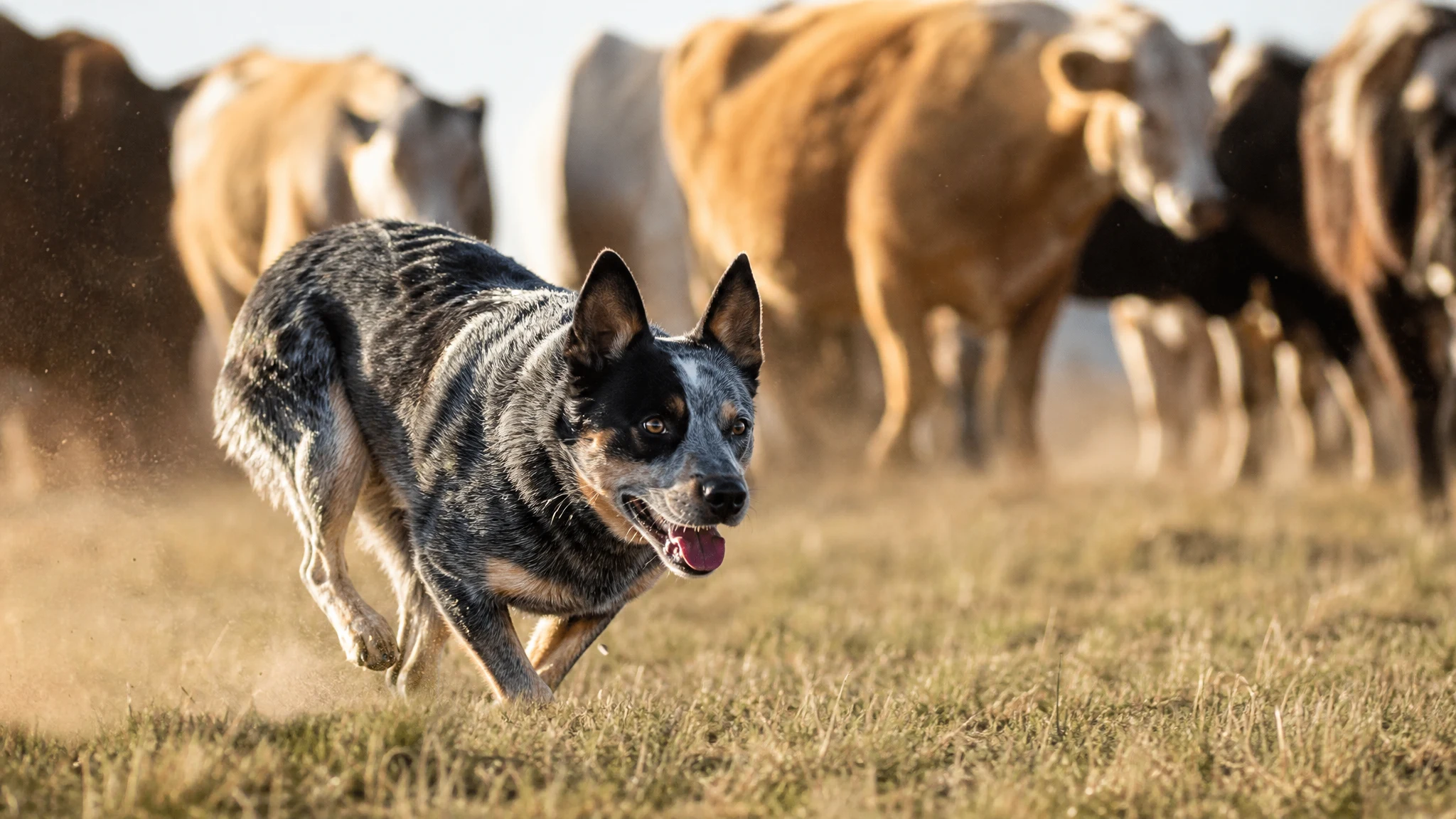
A Blue Heeler with nothing to do will find something to do. You may not like the choice. The good news is that this breed was built for work, and there are plenty of ways to give a modern dog a job.
This guide walks you through choosing a sport or task, getting started, and avoiding the mistakes that sour many first-time handlers. It covers blue heeler sports, the blue heeler working dog tradition, and the dog sports for blue heelers that are easiest to try.
If you are still building basic manners, start with our complete guide to Blue Heeler training and come back here when your dog has a reliable foundation.
Why This Breed Needs a Job
The Australian Cattle Dog Club of America (ACDCA) explains that the breed was developed in Australia in the 1800s by immigrants from the British Isles. Its original purpose was working and moving cattle across unfenced, harsh scrub range with large herds. The ACDCA breed history page describes Queensland experiments with Dingo and blue merle Collie crosses starting in 1840.
The official name is Australian Cattle Dog. Blue Heeler is the common name for the blue-coated dogs, and this article uses it that way.
That history shows up in your living room. The Westminster Kennel Club breed page rates energy at 5 out of 5 and trainability at 4 out of 5. These are Westminster ratings, not AKC ratings, and individual dogs vary. The ACDCA says the breed needs a job or purpose, plus both physical and mental exercise. The UK charity PDSA says to plan on over 2 hours of exercise a day.
The ACDCA also describes the breed as highly intelligent, self-directed, loyal and protective, with a strong desire to please. Self-directed is the key word. A Heeler may have its own opinion about how a task should go, and good sport training works with that instead of fighting it.
The Sports and Jobs That Fit
Here are the options named by the ACDCA and Westminster Kennel Club. Each one gives a different kind of outlet.
Herding
This is the breed's original line of work. The AKC offers herding tests and trials, and the ACDCA points to them as a way to test the instincts the breed was developed for. Westminster lists herding among the breed's activities. It suits the breed for the obvious reason: it uses the exact behavior the dog was bred to perform.
Agility
Agility asks a dog to run a course of obstacles while following the handler's direction. The ACDCA includes agility in its Versatility Award divisions, and Westminster lists it too. It suits an athletic, quick-thinking dog that likes to move and solve problems.
Obedience
Obedience rewards precision and focus. It is also listed by both the ACDCA and Westminster. For a dog that thinks for itself, obedience work teaches it to check in with you before making its own plans.
Rally
Rally is another of the ACDCA Versatility Award divisions. It is a good middle step between pet manners and formal obedience, because you move through a course of signs with your dog and can work with it as a team.
Cattle droving
The ACDCA lists cattle droving as the breed's original job. If you live near a working farm or ranch, ask whether anyone offers stock work for dogs. Do not assume a particular program exists in your area. Ask local herding clubs or the ACDCA for leads.
What You Need Before You Start
- A dog with the basics in place: attention on you, a reliable recall and a solid sit and down.
- A buckle collar or harness and a standard leash. No shock, prong or choke collars.
- Small, soft treats your dog loves, and a toy if your dog works for play.
- A clicker or a short marker word. The ACDCA says the breed excels at clicker training.
- A safe, secure area for practice, such as a fenced yard or a quiet field.
- A current vet check, especially for joints and eyes, before you begin athletic work.
- The current rulebook for any sport you choose, from the AKC or the organization running the event.
Step-by-Step: Getting Started
Step 1: Check your dog's health first
Ask your veterinarian whether your dog is fit for athletic work. The ACDCA CHIC requirements list hip dysplasia, elbow dysplasia, an eye exam, prcd-PRA, deafness (a BAER-based evaluation) and primary lens luxation among the required screens for breeding dogs. The 2007 ACDCA health survey of 402 respondents reported concerns about hip and elbow dysplasia, deafness, prcd-PRA, cancer and other eye disorders. PDSA also lists luxating patellas.
Those are reported concerns, not rates for your dog. Your vet is the right person to decide what your own dog needs checked. If you bought from a breeder, ask what screening the parents had.
Step 2: Respect your puppy's growing joints
The ACDCA says not to push extreme exercise until growth stops and the joints are mature. A young puppy can learn focus, name games, hand targets and calm behavior around other dogs. Save the jumping, hard turns and long runs for later, and ask your vet when your dog is ready.
Step 3: Build the foundation with rewards
The ACDCA says positive training works best and that harsh physical methods are seen as a challenge by the breed. This fits with the AVSAB's position on humane, reward-based training.
Mark the behavior you want with a click or a word, then deliver the treat. Keep sessions short and end while your dog still wants more. Aim to teach these basics:
- Eye contact and a quick response to its name.
- Sit, down and stay.
- A recall from distractions.
- Walking on a loose leash.
- An "off switch," meaning settling on a mat.
Step 4: Teach bite inhibition and manners with movement
PDSA notes that the herding instinct can lead to heel nipping, including at running children. The ACDCA says puppies must learn not to nip inappropriately and recommends teaching bite inhibition. Reward your dog for calm behavior around moving people. If your dog starts to nip, end the game calmly and offer a toy or a trained behavior instead.
The Westminster page rates the breed 3 out of 5 for children and 3 out of 5 for other dogs. Supervise all play, and never leave a young child alone with any dog.
Step 5: Socialize early and thoughtfully
The ACDCA recommends early socialization and puppy classes. It also notes the breed is naturally suspicious of strangers, according to the standard. Plan calm, positive meetings with new people, places and surfaces. Pair each one with treats. Do not force greetings. Sports venues are busy, so a dog that stays relaxed around crowds and other dogs will have an easier time.
Step 6: Pick one sport and find a local class
Choose a sport that matches both your dog and your lifestyle. Then look for a class or club. In general terms, you can:
- Ask the ACDCA about regional Australian Cattle Dog clubs and members who compete.
- Check the AKC for clubs, events and rules in sports such as herding, agility, obedience and rally.
- Ask local training clubs whether they offer beginner classes in your chosen sport.
- Ask your vet or groomer for recommendations, then watch a class before you sign up.
Watch for instructors who use rewards and who are comfortable with herding breeds. If a class relies on harsh corrections, leave. Check any fees, age requirements and equipment rules directly with the club or event, because we cannot list them for you.
Step 7: Start small and keep it fun
Begin with a few minutes of practice at a time. For agility or rally, teach one skill at a time and reward each small success. For herding, find an instructor who can introduce your dog to livestock safely and read your dog's body language. Add difficulty slowly. If your dog is confused or frustrated, go back a step.
Step 8: Try a test, trial or title when you are both ready
Competition is optional. You can enjoy classes for years without entering an event. If you do want to try, the ACDCA Versatility Award recognizes dogs that do well across several areas, including Obedience, Rally and Agility. The AKC runs herding tests and trials. Read each program's rules, then enter a beginner level.
Tips for Success
- Mix physical and mental work. The ACDCA stresses both. Ten minutes of training can tire a Heeler as much as a long run.
- Vary the routine. A smart, self-directed dog can get bored with endless repetition.
- Use the dog's own drive. Chasing a toy or getting to "work" can be a strong reward.
- Practice stillness. Sports build arousal, so teach your dog to wind down afterward.
- Do not leave your dog alone in the yard for long. PDSA says the breed dislikes being left unattended outside.
- Stay consistent. The ACDCA says owners must be willing to train and be a clear, fair leader. That means calm structure, not force.
Common Mistakes to Avoid
- Doing too much too soon. Hard exercise on immature joints is a risk. Follow your vet's advice.
- Using force. Harsh methods can backfire with a determined, independent dog. Do not use shock, prong or choke collars, alpha rolls or scruffing.
- Using sport as the only outlet. A weekly class does not replace daily exercise and enrichment.
- Ignoring nipping. Redirect it early and consistently.
- Skipping socialization. A dog that is wary of strangers needs careful, positive exposure.
- Chasing titles over enjoyment. If either of you is miserable, change the plan.
- Self-diagnosing limping or sore spots. Take your dog to a veterinarian.
What to Expect
Results depend on your dog's age, health, temperament and your training consistency. With regular, reward-based practice, many Heelers may become more focused, settle better at home and show less destructive behavior. A good outlet may also reduce some of the nipping and pestering that come from boredom, though it will not remove the herding instinct.
Progress is usually uneven. Some dogs take to herding at once. Others need weeks to build confidence on agility equipment. Treat a slow week as normal. Judge your progress by whether your dog is eager, relaxed and recovering well, not by ribbons.
The ACDCA lists life expectancy at about 12 to 16 years, while PDSA says over 10 years. Whichever figure applies to your dog, many years of shared activity may be possible if you keep it healthy and enjoy the work together.
Putting It Together
The best blue heeler working dog is a happy one with a purpose. Pick a sport, find a reward-based class, build slowly and keep your vet involved. Whether the goal is a herding title or a tidy rally run in the park, the point is to give a bright, driven dog meaningful work.
Sources
- Australian Cattle Dog Club of America: Breed History
- Australian Cattle Dog Club of America: Breed Origin
- Australian Cattle Dog Club of America: Your New Australian Cattle Dog
- Australian Cattle Dog Club of America: Versatility Award
- Australian Cattle Dog Club of America: OFA-CHIC Health Testing Requirements
- Australian Cattle Dog Club of America: 2007 Health Issues Survey
- Westminster Kennel Club: Australian Cattle Dog
- PDSA: Australian Cattle Dog